

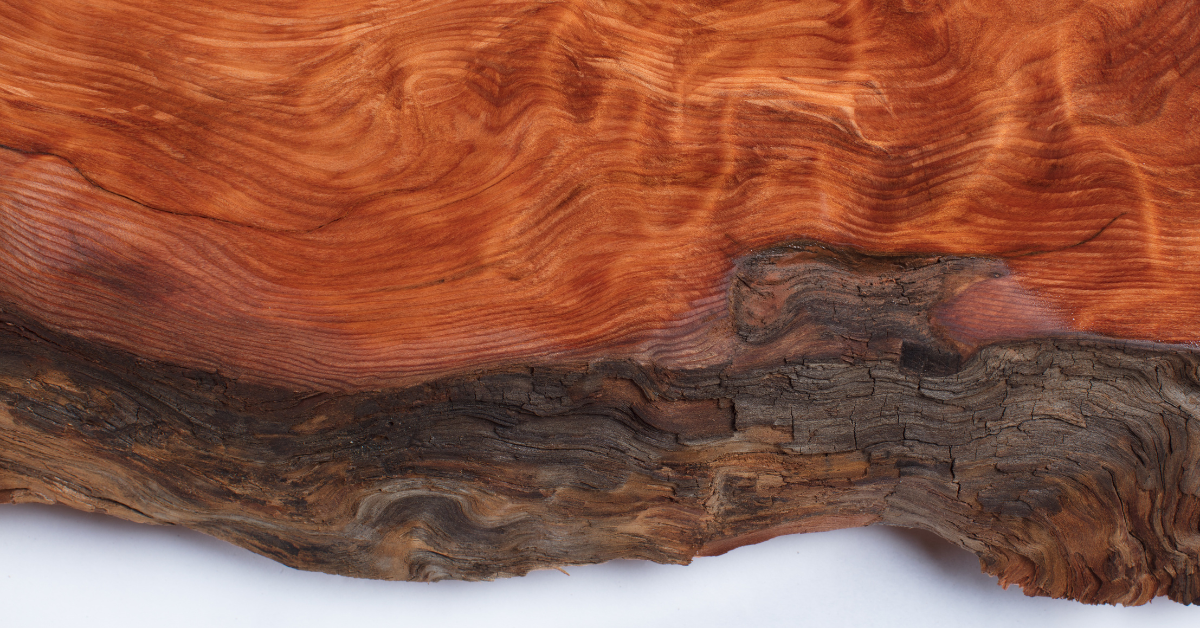
Why choose wood slab countertops? Because a solid wood slab gives you something manufactured surfaces can’t — a countertop shaped by the tree itself. You’re choosing a specific piece of wood with all the natural grain, knots, figure, shape, and color that make it unique — and impossible to replicate.
From kitchen islands and bar tops to restaurant counters and conference tables, using wood slabs for countertops adds warmth and natural character to any room in a way that stone, laminate, and other fabricated materials can’t.

What are Wood Slab Countertops?
A wood slab countertop is milled from a 3” thick cross-section of a single log. Then properly dried, flattened, and finished for use as a countertop.
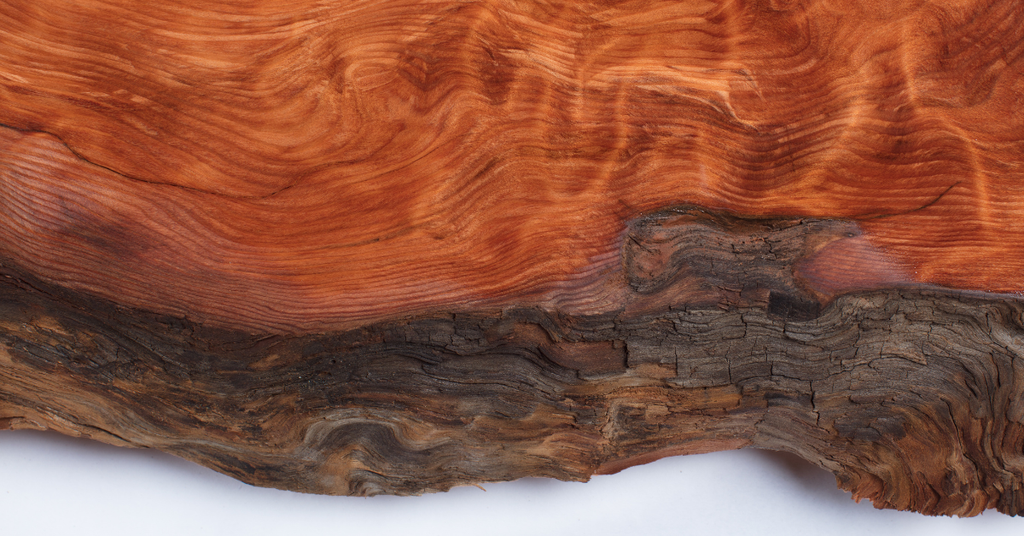
Many designs preserve the live edge – the natural, uncut outer contour of the tree – as part of the finished piece. Which makes them different from butcher block countertops assembled from multiple strips of wood glued together.
Why Everybody Loves the Live Edge
Choosing live edge wood isn’t a passing trend. It’s a fundamental shift in design. Combining the organic geometry of live edge wood slab countertops with finished interior elements – tile, metal, stone, and glass – creates an elegant tension that works in any space — from modern kitchens and industrial restaurants to rustic cabins and boutique hotels.
Wood Slab Countertops are Great for Homes and Businesses
For any application, wood countertops can become a signature piece of the room:
For Your Home
- Kitchen Islands & Countertops
- Breakfast Counters & Nooks
- Bar Tops & Wet Bars
- Pantry Surfaces
- Bathroom Vanities
For Your Business
- Restaurant & Bar Tops
- Reception Desks & Front Counters
- Retail Counters & Hospitality Features
- Conference Tables & Executive Workspaces
Why GL Veneer for Wood Slab Countertops?
GL Veneer maintains more than 1,000 project-ready live edge slabs across 30+ domestic and exotic wood species. We can match a one-of-a-kind slab to virtually any design style or species your project calls for, including Walnut, White Oak, Maple, Monkey Pod, or African Teak — in sizes from small-scale accent pieces to slabs 20 feet or longer.
More important, we know wood. And we’re always happy to help you evaluate species, dimensions, figure, and live-edge character — whether you visit the GL Veneer warehouse in person to hand-select your slabs or work with us remotely.
Either way, before your countertops ship direct to you, we can flatten and surface them to meet your exact specifications so they’re ready to finish when they arrive.
If your schedule includes firm lead times, please contact us early. The right slab is worth planning for, and you’ll find it in our vast inventory:
- 30+ Domestic & Exotic Species
- Small to 20+ Feet Long
- Flattened & Surfaced
- Book Matched Pairs
Frequently Asked Questions
What is the Best Wood for Slab Countertops?
There isn’t one “best” species — it depends on how the countertop will be used and how you want it to look. For example, Walnut offers rich color and workability. White oak is durable and finishes beautifully. And Monkey Pod combines dramatic grain with exceptional performance.
How Much Do Wood Slab Countertops Cost?
Cost varies by species, size, figure, rarity, and preparation. A domestic slab may be readily accessible, while a large, highly figured, exotic slab can command a premium. For current pricing, check out GL Veneer’s online gallery of live edge slabs.
Why Can Wood Slabs Be Expensive?
Creating great slabs is a time-intensive, highly skilled process. The highest quality slabs come from large, old-growth or specialty trees, which take decades or longer to grow. Once responsibly sourced, the log must be milled and dried before it can be properly flattened and surfaced. That creates an inherently limited supply that makes wood slabs a specialty material, not a commodity — once a particular piece is gone, it can never be reproduced. That individuality creates a wood slab’s value.
